
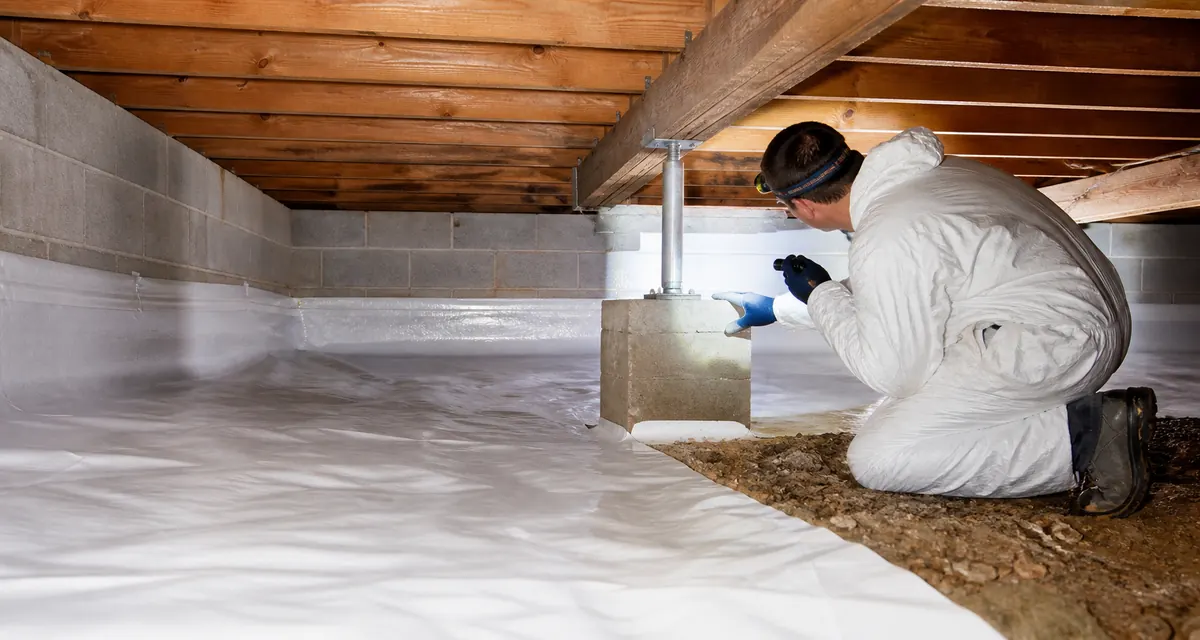
Crawl Space Repair in Fort Wayne, Indiana
Address moisture, damaged supports, sagging floors, and unhealthy conditions beneath your home.
Crawl-Space Warning Signs
A crawl space can affect both the structure below the floor and the air moving through the home. Moisture and support problems often develop out of sight, so changes upstairs may be the first clue.
- Musty odors or unusually high indoor humidity
- Standing water, damp soil, or condensation
- Falling, wet, or damaged insulation
- Wood staining, deterioration, rust, or visible microbial growth
- Floors that sag, bounce, slope, or feel soft
- Gaps near trim, cabinets, doors, or interior walls
- Temporary supports or previous repairs that appear to have shifted
Do not enter a tight crawl space when standing water, unsafe wiring, sewage, heavy contamination, pests, or structural instability may be present. Describe the condition from a safe access point and let a qualified professional determine how to inspect it.
What Causes Crawl-Space Moisture and Floor Problems?
Possible contributors include groundwater, roof runoff, grading, plumbing leaks, open soil, humid outside air, inadequate drainage, missing or damaged vapor barriers, wood deterioration, undersized supports, and settlement. Northeast Indiana’s seasonal moisture and freeze-thaw conditions make water management around the home particularly important. An inspection should consider moisture and structural support together so one problem does not undermine the other repair.
Common Crawl-Space Repair Approaches
- Drainage and water control: directing groundwater or surface water to an appropriate collection and discharge point
- Vapor barriers and encapsulation: separating the crawl space from exposed soil and humid outside air
- Dehumidification: managing remaining humidity after water sources and air leaks are addressed
- Wood and insulation repair: removing damaged materials and correcting the conditions that caused the damage
- Support repair: reinforcing or replacing appropriate beams, joists, posts, or footings
Encapsulation is a system, not just a sheet of plastic. Read more about crawl-space encapsulation in Fort Wayne and moisture warning signs.
What Happens During a Crawl-Space Inspection?
The professional may review access, standing water, humidity, soil cover, drainage, plumbing, insulation, ventilation, joists, beams, posts, footings, and signs of pests or microbial growth. Floors above may also be checked for slope or movement. Ask for the findings to separate moisture-control work from structural repair and to explain any ongoing maintenance.
What Affects Crawl-Space Repair Cost?
Cost depends on crawl-space size and access, water source, drainage needs, vapor-barrier coverage, dehumidification, removal of damaged materials, and the extent of support repair. A moisture-control project and a structural floor-repair project may overlap, but they should be priced and explained clearly.
Crawl-Space Repair FAQs
Does encapsulation fix sagging floors?
Not by itself. Encapsulation helps manage moisture, but damaged or inadequate structural supports require a separate evaluation and repair plan.
Will a dehumidifier solve crawl-space water?
A dehumidifier can help manage humidity, but it should not be used as the only response to standing water, active leaks, inadequate drainage, or structural damage.
When should I schedule an inspection?
Request help when water or odors return, insulation stays damp, wood appears damaged, floors change, or several symptoms occur together.
Request a Crawl-Space Inspection
Tell us what you have noticed above or below the floor. Your request may be shared with an independent service professional serving the Fort Wayne area. There is no obligation to hire anyone.
Tell Us What You’re Seeing
Share a few details about the property and the symptoms you have noticed. Your request may be shared with an independent service professional serving the Fort Wayne area.